


Ever Wake Up Suddenly With A Stiff Neck?

Have you ever waken up with such a stiff neck that
you can’t turn your head in one direction?
Your neck felt fine going to bed. But when you sat up out of bed, you noticed a pinpoint ache in your neck. You try to turn your head to reach for your alarm and the pain worsens. Your neck actually feels like it’s stuck and can’t turn that way. You’ve had a stiff neck like this before and know that it will go away eventually, but if only you could get rid of it quicker…
Most of us have had this experience at one point or another. Waking up with a stiff neck is a common occurrence. The good news is there are ways to prevent it from happening and there are also ways to treat it when it does happen.
What Causes a Sudden Stiff Neck?
Anatomy Background
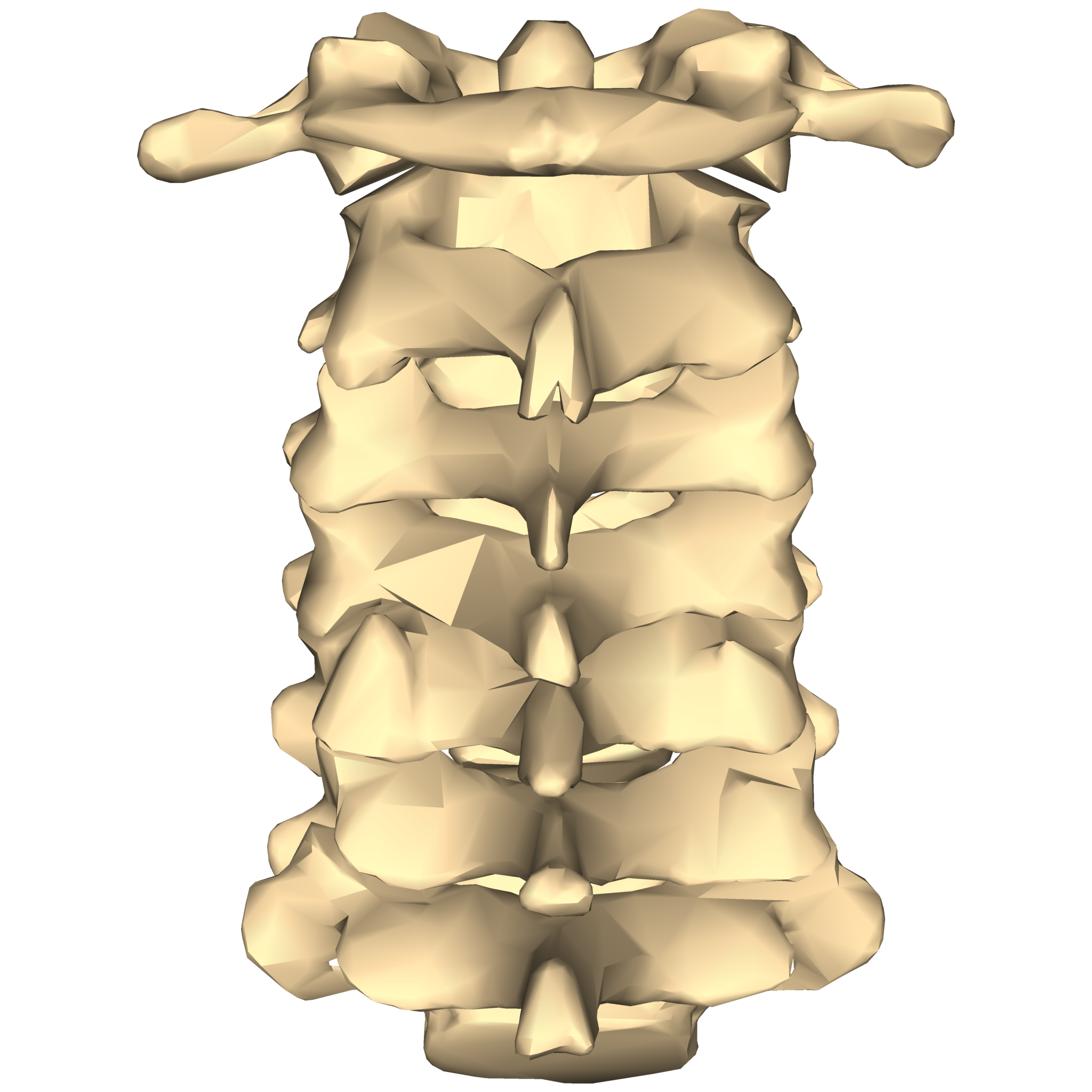 Your cervical spine (neck) has seven vertebrae. There are many joints in the cervical spine but the ones we will be discussing are the facet joints. These are the joints where the outer portions of adjacent vertebrae meet. The facet joints are aligned in about a 60 degree plane and allow adjacent vertebrae to glide along each other so that you can move your neck. These facet joints, like many other joints, are synovial. Synovial joints have a capsule around them which houses synovial fluid, a lubricating agent for the joint.
Because the facet joints in the cervical spine are so small, there is a possibility of tissues getting caught in between the joint surfaces. When that happens, the joints can’t move and you end up with a suddenly stiff neck.
Dr. Stanley Paris was the person who first suggested the mechanisms of a capsular entrapment. There are three tissues that can become trapped inside the facet joints; the joint capsule, an elastic ligament called ligamentum flavum, and the small triangular meniscus. When any of these become entrapped, you will have trouble turning your neck toward that side.
How You Can Treat A Sudden Stiff Neck
The real question is, how do release the entrapped tissue from the joint so that you can turn your neck again? There is a small muscle between each vertebrae that attaches into the joint capsule. This muscle is called the multifidus. You can activate that muscle to pull on the joint capsule, and help release whatever is stuck in the joint. This should provide you with some neck pain relief.
The facet joints glide up (open) and glide down (close) depending on movement. For example, if your pain is on the left side, you will have trouble bending to the left and rotating to the left because those motions close down the joints on the left side. Therefore, you want to open up the joints on the left side. Once you’ve opened them up, you can use the multifidus to help pull on the capsule and free up the joint.
For the purposes of this video, we’re going to assume the patient’s pain is on the left side.
Keep in mind that this may not always work immediately and alleviate pain immediately. Depending on how long through the night the tissue has been trapped in the joint, there will likely be some associated inflammation. This inflammation will prolong the pain response and you may still get aching throughout the day. The good news is there are other techniques you can use in conjunction with this technique for neck pain relief.
How To Treat The Muscles
With any joint dysfunction, there is almost always going to be a muscular component as well. If the joint cannot move through it’s full range of motion, the surrounding muscles often tend to become tight and tense up. Sometimes, it is necessary to treat the muscles and allow them to relax prior to treating the joints. This can be said for other areas of the body too, not just the neck.
Treating the muscles around your own neck is not an easy thing to do. Relaxing your neck muscles can be almost impossible when trying to work on your own neck. Your outcomes will be better in the hands of a skilled physical therapist. But, what if you don’t have time to see your physical therapist and you need some immediate neck pain relief? My suggestion is that you try using some myofascial release tools to decrease the tone in your neck musculature. Myofascial release is a technique utilized my many healthcare practitioners to increase the pliability of muscles and alleviate pain related to hypertonic (tight) muscles. Investing in a set of your own myofascial release tools is a good idea not only for neck pain relief, but also to treat other areas of your body. Learn more about how to use myofascial release tools here.
There are a ton of myofascial release tools available on the market, and it can be difficult to know what to choose. I personally use this simple foam roller from Amazon to work on larger muscle groups, and these massage balls from Deep Recovery when I want to do more specialized self-myofascial work. Feel free to check out my other recommended products for other equipment that I personally use and recommend to my patients.
When The Pain Doesn’t Resolve
If your neck pain is not resolved by using both the technique shown in the video and self-myofascial techniques, it may be time to see a specialist. There are some conditions that do not resolve spontaneously. Your local physical therapist will perform a proper evaluation and develop a treatment plan that will help get you better.
Please share this post with your family and friends on social media using the share buttons below. Feel free to reach out to me with any comments or questions. Enjoy!