


Rotator Cuff Anatomy & Overview
What is the Rotator Cuff?
You have probably heard of the rotator cuff and may even know someone who has had a rotator cuff injury or surgery. But what is the rotator cuff and why is it important?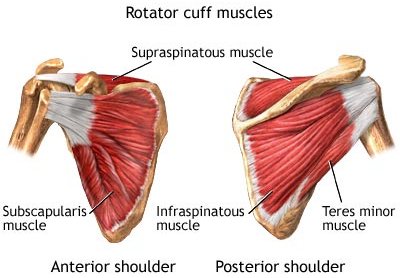
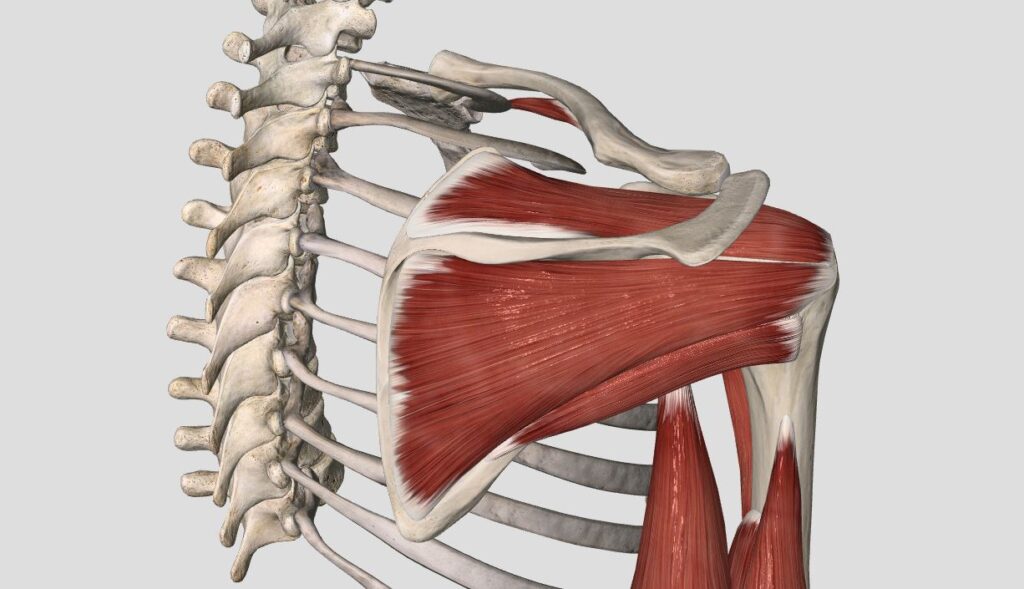
The rotator cuff is a collective term for 4 different muscles around your shoulder joint.
- Supraspinatus
- Infraspinatus
- Subscapularis
- Teres Minor
These muscles are all different and each has a specific purpose. Why do we collectively refer to them as the rotator cuff? Although these muscles perform different actions, they also work together. Your shoulder is a ball and socket joint. The ball is much larger than the socket and is therefore, inherently an unstable joint. The shoulder is built for mobility rather than stability. The stability of the shoulder joint is provided by a capsule surrounding the joint, ligaments, and the rotator cuff. The capsule and ligaments provide “passive stability,” while the rotator cuff is meant to provide “active stability.” The rotator cuff works collectively to keep the ball centered in the socket during active movements. When you lift your arm overhead, the rotator cuff works to create a downward force on the “ball” to allow room for it to rotate within the socket.
Rotator Cuff Pathology
When the rotator cuff is not working properly, it can result in dysfunctional joint motion and ultimately cause shoulder impingement. This may start out as a mild discomfort with reaching overhead. Many people do not seek treatment at this point because they are able to deal with the pain as it is not impacting their function significantly yet. That is a mistake. If you are starting to get even a mild pain or discomfort with reaching overhead, that is the best time to seek treatment. Without proper treatment and intervention, rotator cuff dysfunction can lead to tendinopathy and eventually lead to a degenerative rotator cuff tear. Most rotator cuff tears are degenerative in nature and result from long-term movement pattern dysfunctions. It is human nature to prolong seeking medical attention until a condition is severely impacting function. However, please do yourself a favor and take good care of your shoulders. Don’t let your symptoms get worse and compromise the long term health of your shoulder joints. See your physical therapist as soon as you start to develop aches and pains so that you can prevent the condition from worsening.
Have questions about your own shoulder? Feel free to contact us and schedule a FREE consultation!
Rotator Cuff Exercise Resources
For more awesome information and exercise tips, be sure to follow us on Instagram!
Here are two previous blog posts including some great shoulder exercises.
Easy rotator cuff exercises to perform at home or work
Dynamic shoulder exercises for the overhead athlete
More Resources
Did you enjoy this style of video learning? Our online running course is full of these types of videos. The videos guide you through the anatomy of specific running injuries and teach you ways to manage and prevent those running injuries. Check out our online running course now and get ahead of the competition!