


Three Manual Techniques to Relieve Posture-Related Neck & Back Pain
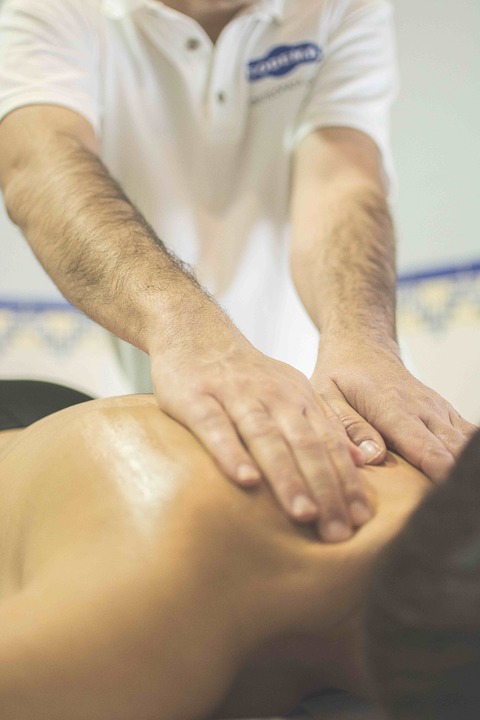
Most people experience some degree of back pain throughout their life. For those of you who spend a large portion of your day seated, you may be dealing with a nagging dull ache in the upper and mid back. This type of pain is often posture-related and due to joint restrictions in the upper thoracic spine. In this post, we’ll review three techniques that can help relieve that pain and improve the overall mobility through your thoracic spine.
Posture is dynamic and varies throughout the day. It shouldn’t be thought of as some magical static position you need to maintain throughout the day. However, it is still very important. There are many common musculoskeletal conditions that are driven by posture. Many of us spend the majority of the day in a seated position, which typically results in rounded shoulders, increased thoracic kyphosis (forward flexed position), and a forward head position. When this type of posture becomes habitual, it leads to increased stresses to several areas of the spine. The upper thoracic region tends to stiffen up and normal joint mobility becomes restricted. This often leads to a centralized dull ache in the upper and mid back. Having a skilled physical therapist perform these three manual techniques, can help to free up joint restrictions and make big improvements in upper thoracic joint mobility.
Thoracic Extension Overpressure
I use this technique all the time with patients who have joint restrictions in the mid and upper thoracic regions. Be sure to screen the shoulder and cervical spine prior to attempting this technique because some patients may experience discomfort with it. Have the patient seated at the edge of a chair with their arms in what I call the “genie position” and their forehead resting on their forearms. Standing in a lunge stance, interlace your hands through theirs as shown in the video. With two fingers of each hand on the transverse processes of a thoracic spinal segment, apply gentle pressure as you lean your body back. You don’t necessarily need to pull up as much as you just need to lean back. This will drive their thoracic spine into an extended position and from there, you can apply gentle pressure at end-range. You’ll be amazed at how easy it is for the clinician and how comfortable it is for the patient.
Upper Thoracic Rotation Mobilization with Movement
I use this technique for patients with upper thoracic joint restrictions. The patient may report aching pain around the CT-junction during active cervical rotation. For this technique, have the patient in a comfortable, seated position. Stand behind the patient and find the spinal motion segment that is restricted. As someone rotates their head to end-range, there should be some degree of that motion recruited down all the way into the upper thoracic region. I often find mobility at the C7/T1 segment to be limited in patients. To improve right rotation, place the pad of your right thumb on the right side of the C7 spinous process and the pad of your left thumb on the left side of the T1 spinous process. Now have the patient actively rotate their head to the right as you gently apply overpressure through each thumb. You are assisting the C7 spinous process to swing to the left as you block the T1 spinous process. Repeat this for several repetitions to each direction and the re-assess their active cervical rotation.
Cervical-Thoracic Junction Manipulation
This technique is a bit more aggressive than the previous two techniques. Some patients respond better to oscillation type joint mobilizations while others tend to respond well to thrusts. There are many factors that go into deciding which technique is appropriate for each patient and that is another discussion. I do not recommend this technique to be performed by anyone who has not been trained in thrust joint manipulations. With that said, for those clinicians who are safe and competent with thrusts, this can be a very effective technique. I am not going to describe how to properly set up and perform this technique because formal training is required to safely perform it.
With any manual techniques you use, always be sure to follow them up with exercises or mobility drills to reinforce the newly gained range of motion. Gain the range and train the range. For mobility drills to use after these specific techniques, I would suggest the thoracic fan exercise or thoracic extension over a foam roll.
As always, please feel free to comment and share this post! If you have specific questions or would like a certain topic to be addressed in an upcoming post, send me an email or fill out a contact form on our contact page. Thanks!
Disclaimer: Consult your state laws regarding spinal manipulation. Washington state currently only allows physical therapists to perform spinal manipulation with a special endorsement. I meet the qualifications to be a clinical supervisor for other therapists looking to pursue that endorsement. The two thrusts techniques performed in the above videos are for educational purposes only. I am not treating a patient.